Active Alerts:
Attention: There is an active wildfire in our region!

If you are an affected resident, please visit the Evacuee Portal below. For all other updates and resources, visit our Emergency Operations Center below.

What do I do if:
Who do I contact about:
Who we are
Emergency resilience is our priority.

The Cowichan area has a Regional Emergency Program that includes nine electoral areas, four municipalities and works collaboratively with the First Nations. We are a local and regional government service that focuses on emergency management. Our goal is to lead the communities throughout the Cowichan region to prepare, respond, recover and mitigate for emergency or disaster situations.
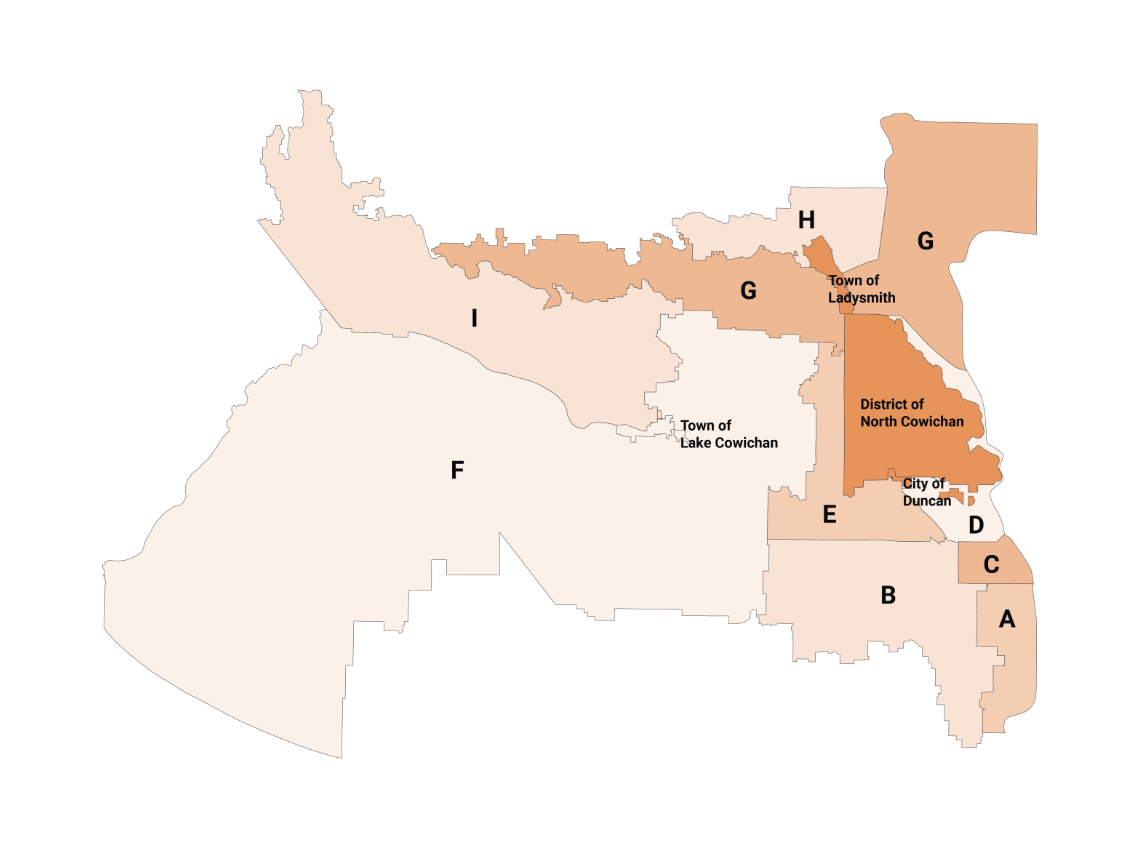

The following regions include:
A – Mill Bay, Malahat
B – Shawnigan Lake
C – Cobble Hill, Arbutus Ridge
D – Cowichan Bay, Cherry Point, Koksilah Village
E – Eagle Heights, Sahtlam, Glenora, Cowichan Station
F – Honeymoon Bay, Mesachie Lake, Caycuse
G – Saltair
H – North Oyster, Yellowpoint
I – Youbou
City of Duncan, District of North Cowichan, Town of Ladysmith, Town of Lake Cowichan

News & Updates
Headline Here
Evacuation Expanded

February 11, 2026

As a result of warmer temperatures and increased precipitation, there is localized flooding near several watersheds including the Koksilah River, Cowichan River, Lake Cowichan and the Chemainus River. There are high water levels in several areas and flooding has caused evacuation in several communities. As a result of warmer temperatures and increased precipitation, there is localized flooding near several watersheds including the Koksilah River, Cowichan River, Lake Cowichan and the Chemainus River. There are high water levels in several areas and flooding has caused evacuation in several communities. As a result of warmer temperatures and increased precipitation, there is localized flooding near several watersheds including the Koksilah River, Cowichan River, Lake Cowichan and the Chemainus River. There are high water levels in several areas and flooding has caused evacuation in several communities. As a result of warmer temperatures and increased precipitation, there is localized flooding near several watersheds including the Koksilah River, Cowichan River, Lake Cowichan and the Chemainus River. There are high water levels in several areas and flooding has caused evacuation in several communities. As a result of warmer temperatures and increased precipitation, there is localized flooding near several watersheds including the Koksilah River, Cowichan River, Lake Cowichan and the Chemainus River. There are high water levels in several areas and flooding has caused evacuation in several communities. As a result of warmer temperatures and increased precipitation, there is localized flooding near several watersheds including the Koksilah River, Cowichan River, Lake Cowichan and the Chemainus River. There are high water levels in several areas and flooding has caused evacuation in several communities. As a result of warmer temperatures and increased precipitation, there is localized flooding near several watersheds including the Koksilah River, Cowichan River, Lake Cowichan and the Chemainus River. There are high water levels in several areas and flooding has caused evacuation in several communities. As a result of warmer temperatures and increased precipitation, there is localized flooding near several watersheds including the Koksilah River, Cowichan River, Lake Cowichan and the Chemainus River. There are high water levels in several areas and flooding has caused evacuation in several communities. As a result of warmer temperatures and increased precipitation, there is localized flooding near several watersheds including the Koksilah River, Cowichan River, Lake Cowichan and the Chemainus River. There are high water levels in several areas and flooding has caused evacuation in several communities. As a result of warmer temperatures and increased precipitation, there is localized flooding near several watersheds including the Koksilah River, Cowichan River, Lake Cowichan and the Chemainus River. There are high water levels in several areas and flooding has caused evacuation in several communities. As a result of warmer temperatures and increased precipitation, there is localized flooding near several watersheds including the Koksilah River, Cowichan River, Lake Cowichan and the Chemainus River. There are high water levels in several areas and flooding has caused evacuation in several communities. As a result of warmer temperatures and increased precipitation, there is localized flooding near several watersheds including the Koksilah River, Cowichan River, Lake Cowichan and the Chemainus River. There are high water levels in several areas and flooding has caused evacuation in several communities. As a result of warmer temperatures and increased precipitation, there is localized flooding near several watersheds including the Koksilah River, Cowichan River, Lake Cowichan and the Chemainus River. There are high water levels in several areas and flooding has caused evacuation in several communities. As a result of warmer temperatures and increased precipitation, there is localized flooding near several watersheds including the Koksilah River, Cowichan River, Lake Cowichan and the Chemainus River. There are high water levels in several areas and flooding has caused evacuation in several communities. As a result of warmer temperatures and increased precipitation, there is localized flooding near several watersheds including the Koksilah River, Cowichan River, Lake Cowichan and the Chemainus River. There are high water levels in several areas and flooding has caused evacuation in several communities. As a result of warmer temperatures and increased precipitation, there is localized flooding near several watersheds including the Koksilah River, Cowichan River, Lake Cowichan and the Chemainus River. There are high water levels in several areas and flooding has caused evacuation in several communities. As a result of warmer temperatures and increased precipitation, there is localized flooding near several watersheds including the Koksilah River, Cowichan River, Lake Cowichan and the Chemainus River. There are high water levels in several areas and flooding has caused evacuation in several communities. As a result of warmer temperatures and increased precipitation, there is localized flooding near several watersheds including the Koksilah River, Cowichan River, Lake Cowichan and the Chemainus River. There are high water levels in several areas and flooding has caused evacuation in several communities. As a result of warmer temperatures and increased precipitation, there is localized flooding near several watersheds including the Koksilah River, Cowichan River, Lake Cowichan and the Chemainus River. There are high water levels in several areas and flooding has caused evacuation in several communities. As a result of warmer temperatures and increased precipitation, there is localized flooding near several watersheds including the Koksilah River, Cowichan River, Lake Cowichan and the Chemainus River. There are high water levels in several areas and flooding has caused evacuation in several communities. As a result of warmer temperatures and increased precipitation, there is localized flooding near several watersheds including the Koksilah River, Cowichan River, Lake Cowichan and the Chemainus River. There are high water levels in several areas and flooding has caused evacuation in several communities.

We are stronger when we help each other.

The Cowichan Valley is a stronger community when we help each other. In the event of an emergency, it is vital that there are dedicated teams of staff and volunteers ready to assist.

CLOSE
Current Burning Permissions
Open burning—or burning outdoors—is allowed when the wildfire risk is low and can be a useful tool when conducted responsibly. Open burning includes Category 1 campfire, Category 2, and Category 3 open fire.
CATEGORY 3
CATEGORY 2
CATEGORY 1 CAMPFIRE
FIRE BAN
CLOSE
Regional Water Use Restrictions
During drought conditions, your water system operator may introduce water use restrictions to conserve limited water supplies. There are four stages of water restrictions which are coordinated across the Cowichan Valley. Local conditions may sometimes require a higher stage of water restrictions on certain systems.
No Restrictions
Stage 1 Restrictions
Stage 2 Restrictions
Stage 3 Restrictions
Stage 4 Restrictions
CLOSE